
Most HOA maintenance happens reactively: something breaks, someone complains, then it gets fixed. The buildings that spend the least over time are the ones that flipped that order.
Common areas Lobbies, hallways, elevators, and shared amenity spaces need a cleaning and inspection rhythm, not just attention when they look bad.
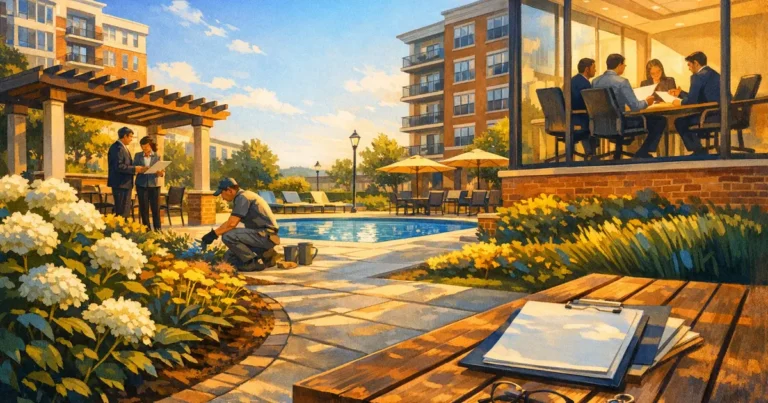
Exteriors and grounds Landscaping, exterior paint, and walkways age visibly and predictably — most of it is manageable on a schedule instead of a scramble.
Mechanical systems Elevators, water pumps, and backup generators are the systems nobody thinks about until they fail at the worst possible time. Scheduled servicing is dramatically cheaper than emergency repair.
Safety systems Fire extinguishers, emergency lighting, and exit signage need routine checks — not because they usually fail, but because “usually” isn’t good enough for safety equipment.
The real cost of skipping this Deferred maintenance doesn’t disappear — it compounds. A gutter that isn’t cleared becomes a leak. A leak becomes a mold problem. A mold problem becomes a much larger bill and an uncomfortable conversation with residents.
Why one point of contact matters Most HOAs end up managing separate relationships with an electrician, a landscaper, a pool tech, and a general handyman — each with their own schedule and availability. Routing that through a single coordinating partner means one call instead of five, and one team that actually knows the building’s history.
We handle common-area upkeep, exterior maintenance, and contractor coordination for buildings across Panama City — talk to us about a standing maintenance plan.